In today’s competitive landscape, understanding how Lab Alliance enhances electrophoretic mobility testing is essential for industries reliant on precise particle analysis Zeta Potential. Their advanced capillary electrophoresis systems, combined with automated data analysis tools, streamline the testing process markedly. This innovation not only boosts product quality but also guarantees compliance with regulatory standards. As you explore the various applications and technologies Lab Alliance employs, you’ll uncover the broader implications for pharmaceuticals, biotechnology, and material science.
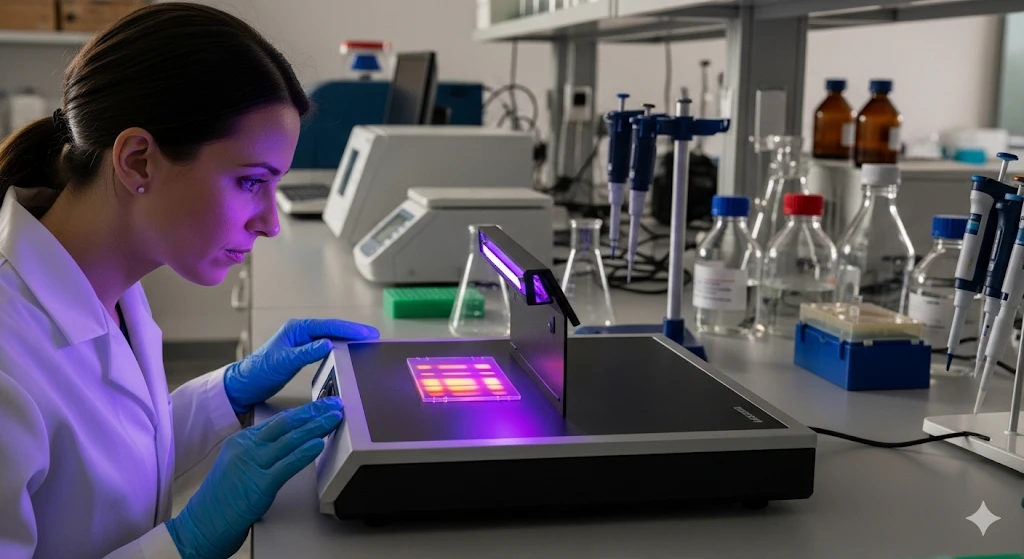
Understanding Electrophoretic Mobility Testing
When you explore electrophoretic mobility testing, you’ll discover it serves as an important method for analyzing the movement of charged particles in an electric field. This technique operates on the principle that charged particles migrate toward the electrode of opposite charge when subjected to an electric field. The rate of this movement, or mobility, is influenced by factors such as particle size, shape, and the medium’s viscosity.
Understanding this principle overview is essential because it directly relates to the testing significance in various applications, including biochemistry and materials science. By accurately measuring electrophoretic mobility, you can gain insights into particle characteristics Lab Alliance, which are vital for quality control, diagnostics, and research purposes.
This testing can also help differentiate between various molecular species, enhancing your analytical capabilities. Ultimately, mastering electrophoretic mobility testing equips you with a powerful tool for precise and accurate particle analysis in diverse scientific fields.
The Technology Behind Lab Alliance’s Approach
Lab Alliance employs cutting-edge technology to enhance the accuracy and efficiency of electrophoretic mobility testing. By integrating advanced electrophoresis techniques, you can achieve precise separation of charged particles, optimizing both resolution and reproducibility.
The lab utilizes high-performance capillary electrophoresis systems, which notably reduce analysis time while increasing throughput.
Moreover, Lab Alliance leverages sophisticated data analysis tools that interpret complex datasets with ease. These tools enable real-time monitoring and thorough visualization of electrophoretic patterns, allowing you to make informed decisions quickly.
Automated software assists in quantifying mobility shifts, ensuring that your results are both reliable and consistent.
This technological synergy not only streamlines the testing process but also enhances the overall quality of the data generated.
Applications in Pharmaceuticals and Biotechnology
As the demand for innovative therapies grows, the applications of electrophoretic mobility testing in pharmaceuticals and biotechnology become increasingly important. This testing method allows you to analyze the movement of charged particles, which is essential for understanding drug formulation and ensuring the efficacy of therapeutic agents.
By employing electrophoretic techniques, you can achieve precise protein analysis, helping to characterize biopharmaceuticals and optimize their formulations.
In drug development, evaluating the electrophoretic mobility of proteins can reveal critical information about their stability, purity, and interactions with excipients. This analytical approach not only accelerates the formulation process but also enhances the reliability of therapeutic products.
Additionally, it aids in quality control, ensuring that the final products meet stringent regulatory standards. By integrating electrophoretic mobility testing, you can greatly improve the development pipeline, leading to safer and more effective pharmaceuticals and biotechnological innovations.

Enhancements in Material Science Testing
While advancements in material science continue to evolve, the integration of electrophoretic mobility testing has significantly enhanced the characterization of materials.
This method provides precise insights into the behavior of various materials under electric fields, allowing for a deeper understanding of their properties.
In polymer analysis, electrophoretic mobility is essential for determining molecular size, charge, and distribution, which are critical for applications in industries like electronics and automotive.
Future Trends in Electrophoretic Mobility Testing
Emerging technologies are poised to revolutionize electrophoretic mobility testing, particularly through the integration of artificial intelligence and machine learning. These advancements will enhance predictive modeling and data analysis, enabling you to achieve more accurate and rapid test results.
As you adopt these technologies, you’ll find they streamline workflows while offering deeper insights into particle behavior and interactions.
However, you must also navigate regulatory challenges that accompany these innovations. Compliance with evolving standards will be vital as the industry shifts towards automated and data-driven methodologies. Staying abreast of regulatory requirements guarantees that your testing processes remain viable and credible.
Moreover, the incorporation of advanced sensors and microfluidics will facilitate real-time monitoring and precise control over experimental conditions. This won’t only improve reproducibility but also expand the application scope of electrophoretic mobility testing across various sectors.
Embracing these trends will position you at the forefront of analytical excellence.
Conclusion
In conclusion, Lab Alliance’s innovative approach to electrophoretic mobility testing greatly elevates analytical precision across various industries. By integrating advanced capillary electrophoresis systems with automated data analysis and real-time monitoring, you’re equipped to make faster, informed decisions. This not only enhances product quality but also guarantees compliance with stringent regulatory standards. As the field continues to evolve, embracing these advancements will be vital for staying competitive and achieving excellence in both pharmaceuticals and material science applications.

Leave a Reply